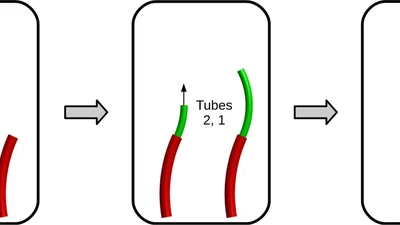
Follow-the-Leader Deployment
The particular architecture of concentric tube robots leads to lateral motions of their bodis while their tips are controlled. Such behavior can be undesired for deployment in …


The particular architecture of concentric tube robots leads to lateral motions of their bodis while their tips are controlled. Such behavior can be undesired for deployment in …
Concentric tube robots (CTRs) have a great potential for use in medical applications. Coupled with a follow-the-leader (FTL) deployment, they allow navigation in constrained …
This paper deals with an original combination of navigation by simultaneous localization and mapping (SLAM) and follow-the-leader (FTL) deployment for the control of concentric …
Inspecting the olfactory cleft can be of high interest, as it is an open access to neurons, and thus an opportunity to collect in situ related data in a non-invasive way. Also, …
This PhD thesis is part of the ANR NEMRO project, whose goal is to study the hypothetical correlation between olfactory deficiency and neurodegenerative diseases. For this purpose, …
In vivo inspection of the olfactory epithelium could lead to breakthroughs in neurosciences, but it can not be accessed today as it is located in a highly constrained area of the …
In this paper, we propose to take advantage of concentric tube robots (CTR) properties to design a robotic system for optical biopsies with fiber-based imaging modalities. …
Concentric tube robots show promising performances for many medical applications. A particularly useful but challenging deployment of these robots, called “follow-the-leader” …